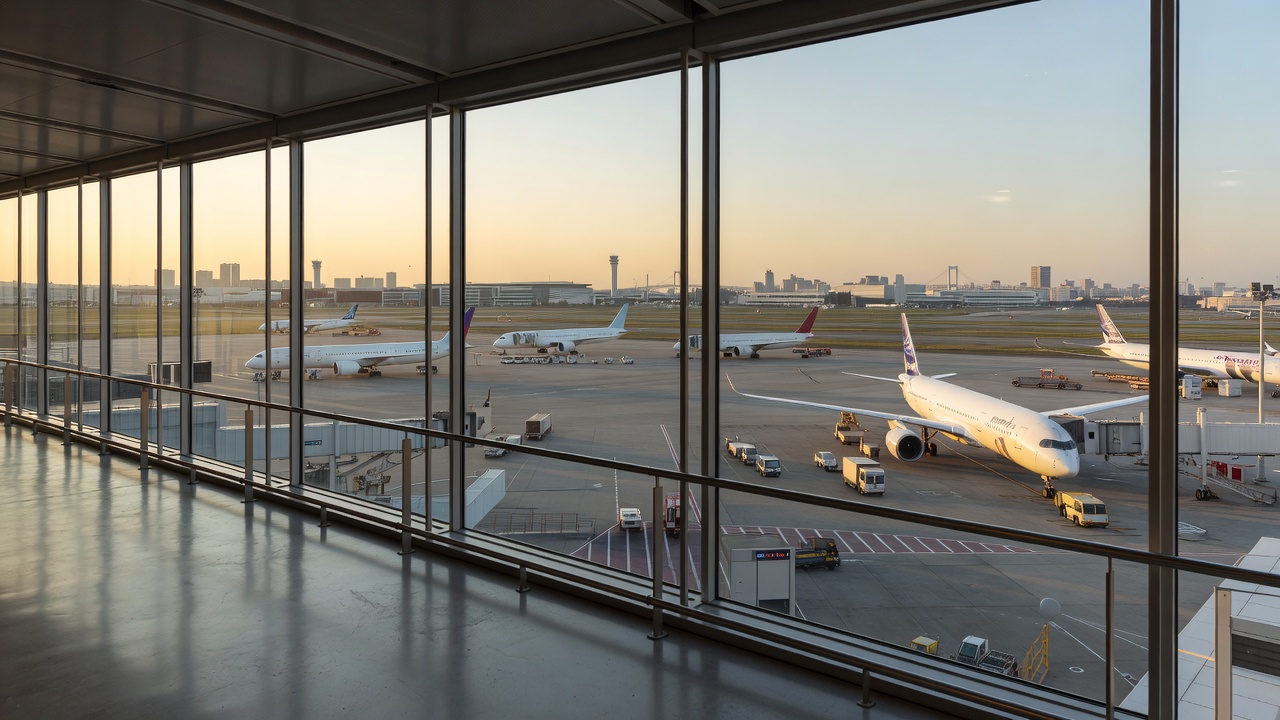
Closer to the Heart of Tokyo
For decades, international travelers bound for Tokyo were routed through Narita International Airport, situated far out in Chiba Prefecture. However, Tokyo International Airport—commonly known as Haneda (HND)—has experienced a massive resurgence in international operations, reclaiming its status as the preferred entry point for business travelers and tourists alike due to its close proximity to central Tokyo.
Terminal Layout and Carriers
Haneda operates three main passenger terminals, characterized by impeccable cleanliness and organizational efficiency—hallmarks that consistently earn it top spots in global airport rankings.
- Terminal 1: Primarily serving domestic flights for Japan Airlines (JAL), Skymark Airlines, and StarFlyer. It features expansive observation decks and a large, multi-story retail space at its center.
- Terminal 2: Historically the domestic hub for All Nippon Airways (ANA), this terminal has recently seen expansions to handle international ANA flights as well, blurring the lines of the traditional domestic/international split.
- Terminal 3: Formerly known as the International Terminal, this modern facility handles the bulk of foreign carriers. It is famous for "Edo Koji," an atmospheric shopping and dining street styled after Edo-period Tokyo, offering arriving and departing passengers an immediate taste of traditional Japanese culture.
Punctuality and Efficiency
Haneda is globally recognized for its incredible on-time performance. Both ground handlers and domestic carriers operate with a precision that allows high-frequency wide-body domestic flights—often using high-density Boeing 777s or 787s—to turn around in less than an hour. The security and immigration processes are similarly streamlined, making transit through Haneda noticeably smoother than many Western counterparts.
Transport Links
Being located on Tokyo Bay in Ota ward, Haneda offers exceptionally fast access to central Tokyo. Travelers have two primary rail options: the Tokyo Monorail, which connects directly to the Yamanote Line at Hamamatsucho Station, and the Keikyu Line, offering rapid service to Shinagawa Station. Both options can place a traveler in central Tokyo in under 30 minutes, a stark contrast to the hour-plus journey required from Narita.